My Philosophy
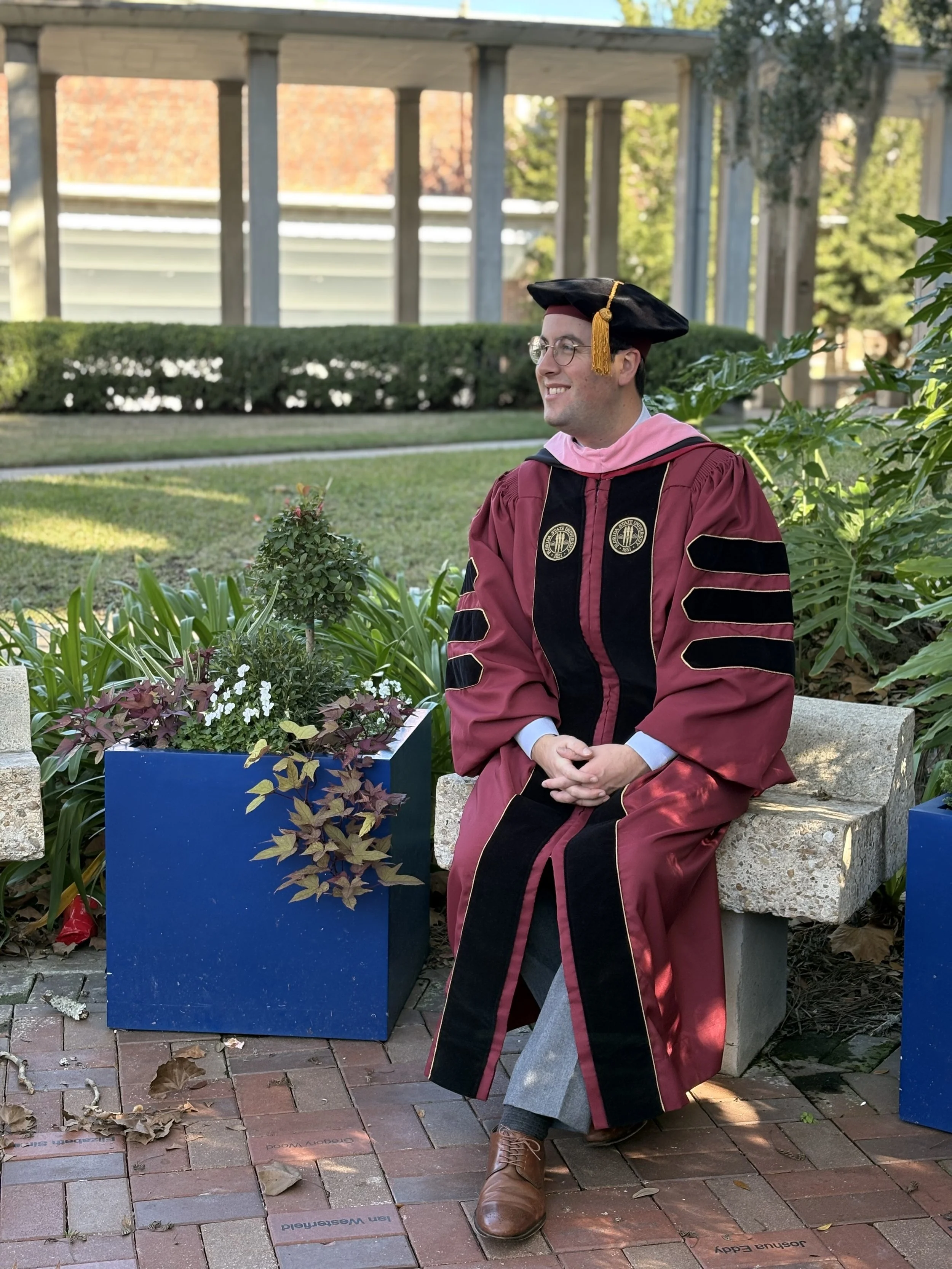
My teaching philosophy centers on empowering students with the skills and resources to guide their own musical development, whether in grade school, college, or as curious adults. For students to guide themselves, they must be able to identify, evaluate, and improve their performance and career skills. Understanding “why” we do what we do is central to this process. A teacher can motivate, but the student’s own agency must remain primary. I encourage students to examine these motivations and help them shape them productively.
Mental understanding is fundamental to everything we do as musicians. I encourage students to internalize technical and musical ideas before applying them physically. For example, hearing a passage vividly in the mind, feeling finger movements before moving the fingers, and imagining sound before producing it. Too often students attempt to learn music with their fingers rather than their mind. I have found this mental approach leads to more efficient and expressive learning.
I structure my lessons around a “fundamentals first” approach. As essential skills such as long tones, scales, arpeggios, and articulations form the foundation of all music - from the common-practice tradition to the avant-garde - lessons begin with these. Materials I use include the David Weber Long Tones, methods by Hyacinthe Klosé and Gustave Langenus, J.B. Albert’s 24 Scales and Exercises, and Carl Baermann’s Method, Vol. III. Too often teachers assume students already understand how to practice fundamentals, but I believe teaching and modeling these habits is among the most important responsibilities of a teacher. Practically, I have achieved this through goal-oriented practice sessions, helping students to reinforce these skills and to establish methodical and attainable long-term goals.
Once individual concepts are discussed and exercises completed, etudes are used to bridge the gap between the abstract nature of fundamentals and the practical demands of repertoire. For example, articulation exercises isolate the skill in its purest form. After experimenting with exercises that address specific deficiencies, students are assigned etudes that emphasize articulation in a musical context. Etude books I use include the Cyrille Rose 32 and 40 Etudes, Alfred Uhl’s 48 Etudes, Paul Jeanjean’s 16 and 18 Etudes, and more advanced studies such as Rudolf Jettel’s The Accomplished Clarinetist and etudes by Bozza and Dubois. This progression prepares students to approach repertoire with the freedom to focus on musical interpretation rather than technical limitations. The same principle applies to phrasing, musicianship, and all other elements of performance. Ultimately, this approach gives students the independence to choose repertoire that excites them, with guidance from the teacher as needed.
While a lifetime could be spent studying the standard clarinet repertoire, I believe it is essential that students also engage with excellent music outside the traditional canon. This includes works by underrepresented composers, lesser-known historical voices, and contemporary composers. This blend of musical heritage and modern innovation produces flexible, informed performers who can engage meaningfully with both familiar and unfamiliar repertoire.
Through this philosophy, I aim for students to leave my studio prepared not only for their varied careers but also for their personal development, whether or not they continue in music. Studying an instrument cultivates creativity, better memory, problem-solving, motor skills, time management, and social awareness and helping students strengthen these qualities is as essential as teaching them to play the clarinet.
-
I teach mainly undergraduate students at Concordia College in Moorhead, MN. However, I do accept advancing middle and high-school students as my schedule allows!
-
Not at this moment, just the clarinet!
-
I primarily teach clarinet alone, with musical concepts introduced as needed. However, I am able to teach beginning music theory inside my lesson structure for clarinet if a student needs it. Contact me and I can determine if I can meet your need!
-
I am currently the Assistant Professor of Clarinet at Concordia College. Prior to that I was on faculty with William Pu Music Academy in Atlanta, GA, and Toccoa Falls College in Toccoa, GA.